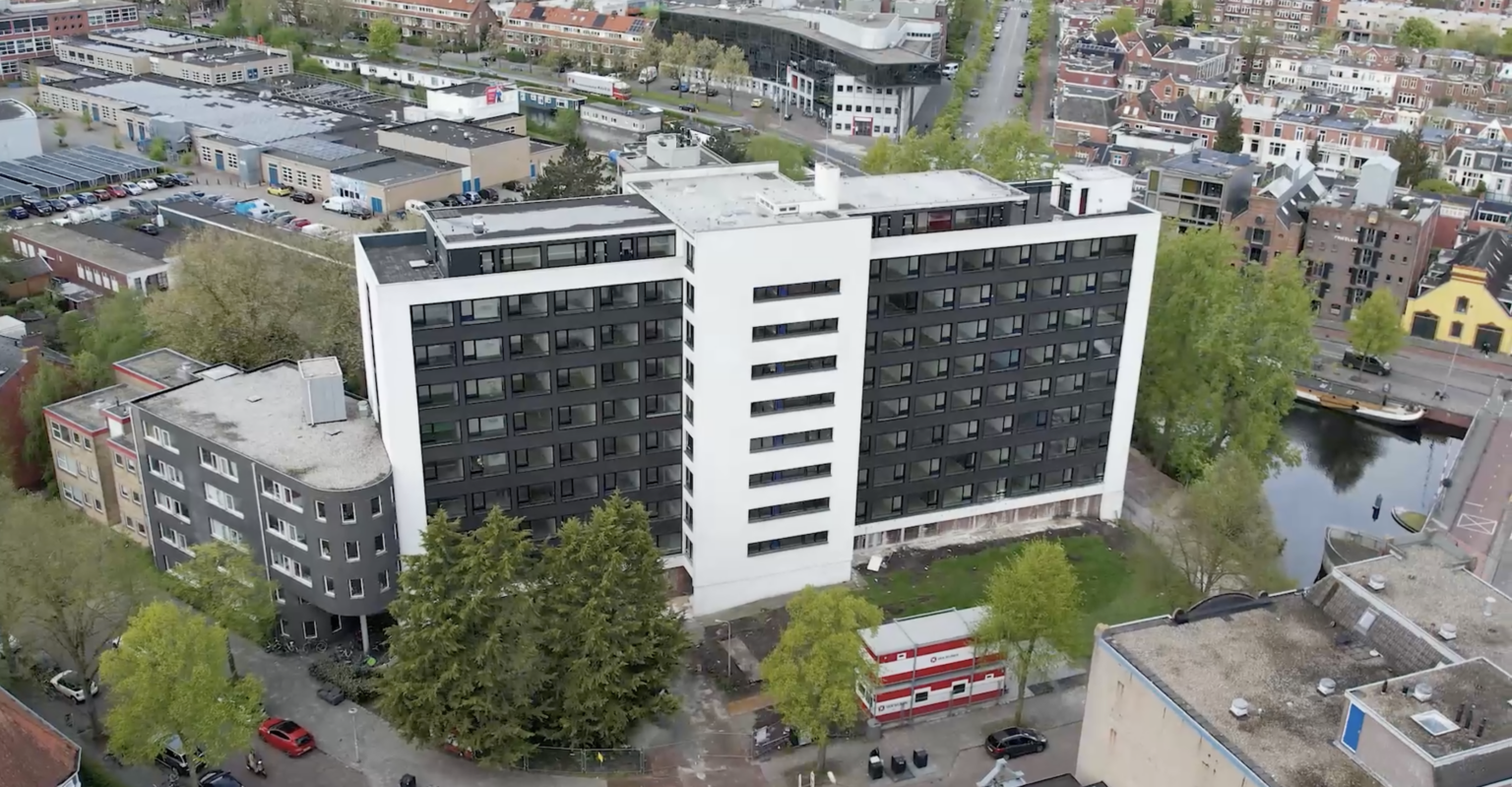
The building was recently renovated as the Dutch demonstration site within the European InCUBE project, and had upgraded the heating system as part of the renovation, with the goal of increasing the sustainability of building operations. The apartment block and social housing corporation owners Lefier subsequently became the subject of critical local media coverage suggesting that tenants had been left without heating and that the housing provider was unreachable.
A closer look at the sequence of events provides context and clarity on how this went amiss. The heating system stopped functioning during the night between the 25th and 26th December, both national holidays in the Netherlands. In the hours that followed, residents initially sought to contact Lefier directly, rather than the designated maintenance provider responsible for heating issues. As a result, the malfunction did not immediately reach the appropriate service channel. Once formally reported on the 27th of December through the correct route, a technician was dispatched and, by approximately 16:00 that afternoon, the central boiler had been restarted and the building began to warm again.
During the same period, a power interruption occurred in one corridor of the building. Further inspection indicated that the outage resulted from the simultaneous use of multiple electric heaters bought by residents in response to the heating outage, which exceeded the circuit capacity. Once identified, the issue was resolved promptly. Not all units were occupied at the time, and many residents were away for the holidays.
While the technical problems were addressed within hours once properly escalated, the episode highlights an important operational lesson. In large residential buildings, reliability depends not only on the performance of the installed systems, but on how clearly reporting procedures are understood and how resilient communication channels remain under peak demand.
Heating faults were intended to be reported directly to the designated maintenance provider, as outlined on the housing provider’s website and digital app. Yet residents understandably turned first to the organisation they associate with responsibility for the building. This gap between formal procedure and instinctive behaviour is not unusual — but it underscores the need for highly visible and intuitive escalation pathways, particularly in newly renovated and electrified buildings.
The situation was compounded by high call volumes at the external service centre handling after-hours enquiries during the holiday weekend. Even with additional staffing, waiting times increased. Such peaks are foreseeable during cold periods, which raises a practical question for renovation at scale: what contingency arrangements exist when primary communication channels are temporarily overloaded?
Building performance research has long recognised that commissioning and operational alignment determine whether renovations perform as intended in practice. As de Wilde (2014) notes in Energy and Buildings, system configuration and occupant interaction significantly influence real-world outcomes. (See: de Wilde, 2014)
For large residential buildings, this means that technical innovation must be matched by disciplined operational planning. Clear service access, defined escalation routes, and resilient communication structures are integral to performance — not secondary to it.
The Van Heemskerckflat remains an important demonstration site within InCUBE’s broader effort to modernise Europe’s housing stock. Demonstration projects exist not only to showcase innovation, but to test it under real conditions and refine processes before replication. When challenges surface, they provide the opportunity to strengthen coordination and improve delivery.
The purpose of demonstration is not perfection. It is progress – tested, improved, and made ready for scale.