


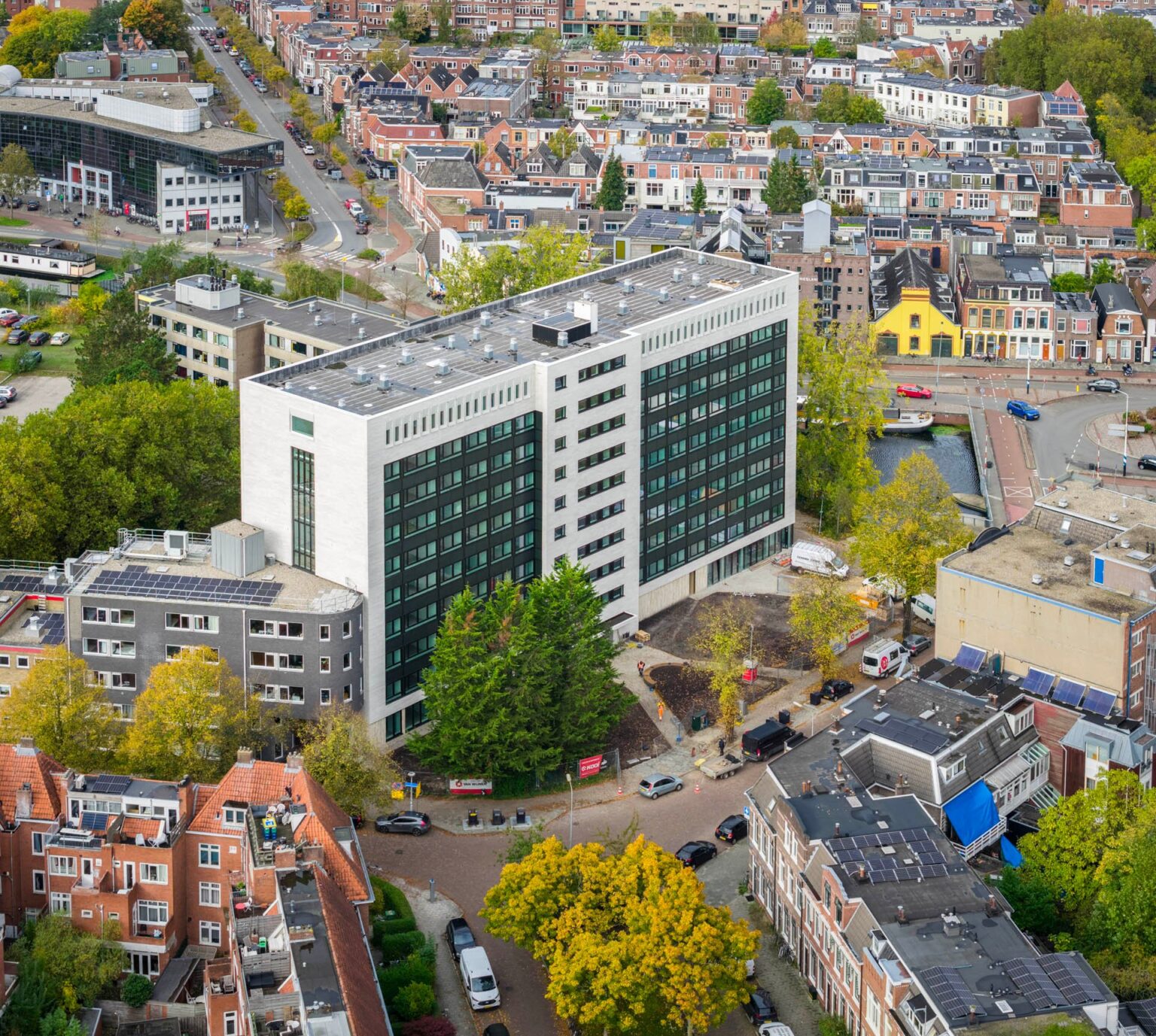
The transformation was commissioned by housing association Lefier and delivered by construction experts Van Wijnen.
For residents, the improvements are obvious:
Rather than demolishing the building, the original concrete structure was retained to reduce material waste and preserve embodied carbon. The strategy focused on upgrading performance while improving liveability.
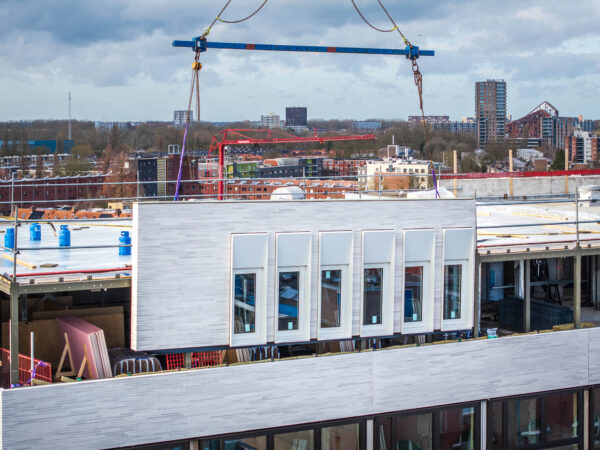
A core innovation at the Dutch demo site is its prefabricated façade approach, which accelerates renovation time and controls for quality.
The building received a new high-performance outer shell using Steigerloos® prefabricated façade elements by WEBO. These were installed in front of the existing structure without traditional scaffolding, accelerating construction and reducing disruption in a dense urban context.
The façade integrates:
This method demonstrates how deep renovation can be delivered at scale with industrial precision – a central ambition of InCUBE for replication across Europe.
Beyond improving the envelope, the renovation fundamentally shifts the building toward electrification.
A heat pump system aids conventional gas-based heating, supporting the Netherlands’ broader transition away from natural gas in residential buildings. The building itself is expected to be gas-free in 2030. By electrifying heating and domestic hot water production, continuous emissions are significantly reduced, while maintaining the gas boiler for the initial operational period eases the transition and improves resilience.
Renewable electricity generation is integrated directly into the building envelope through vertical photovoltaic panels. Rather than treating solar energy as an afterthought, the façade becomes part of the building’s energy infrastructure.
To address grid congestion, a growing challenge in the Dutch energy system, the building also includes on-site battery storage. This allows locally generated electricity to be stored and redistributed within the complex, increasing self-consumption and reducing peak grid demand.
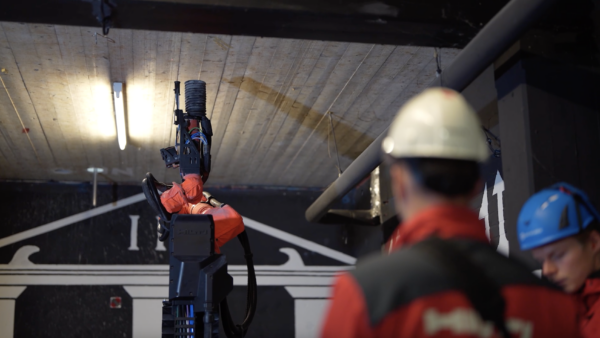
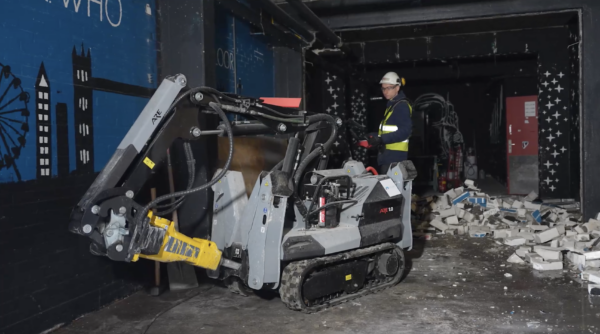
The transformation was supported by advanced digital workflows. The existing building was mapped using drone scanning and further developed in BIM, enabling precise modelling before construction. The digital model supported coordinated execution on site and enabled experimentation with robotics and automated processes in collaboration with technology partners Hilti Nederland and Advanced Robotic Engineering. By linking robotic equipment directly to the BIM model, repetitive and precision-based operations could be executed with greater accuracy and consistency.
This matters for three reasons:
Renovation has traditionally been labour-intensive and unpredictable. At the Van Heemskerckflat, robotics helped demonstrate how digital modelling, prefabrication, and automation can work together – bringing industrial logic into a sector that urgently needs to scale.
The project also delivers social value. The ground floor now houses Buurthuis Nova Zembla, a shared neighbourhood space that brings together students and local residents. Study areas, meeting spaces, and community functions reinforce the building’s role not only as housing, but as part of a wider urban ecosystem.
Sustainability here extends beyond carbon reduction: it supports social connection and long-term affordability.
Within the InCUBE project, the Van Heemskerckflat serves as the Dutch demonstration site, illustrating how:
The reopening of the Van Heemskerckflat is not just the end of a construction phase. It is proof that large-scale, high-performance renovation of social housing is technically feasible, economically realistic, and socially impactful.
Now the next phase begins: monitoring, evaluation, and knowledge transfer — ensuring that the lessons learned in Groningen contribute to faster, smarter renovation across Europe.